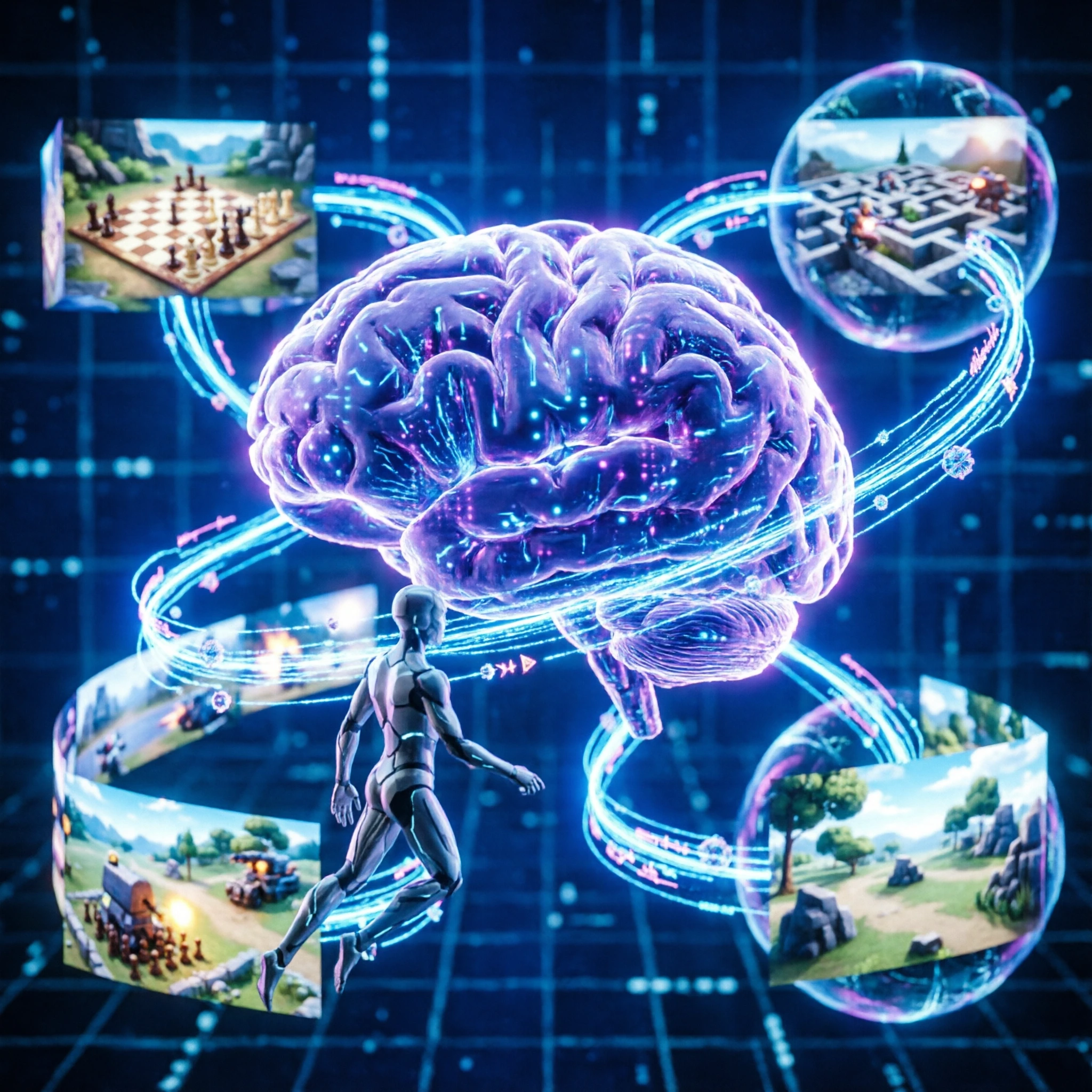
There’s a moment burned into my memory from 2016. I was watching the livestream when AlphaGo made move 37 against Lee Sedol in their historic Go match. Commentators fell silent. Professional players looked confused. That single move initially dismissed as a mistake turned out to be brilliant beyond human intuition. It was my first visceral encounter with what reinforcement learning could actually accomplish.
Since then, I’ve followed this field obsessively, attending conferences, reading countless papers, and watching the technology mature from academic curiosity to practical reality. Games have served as the perfect proving ground, and the implications stretch far beyond entertainment.
Breaking Down Reinforcement Learning

At its heart, reinforcement learning operates on principles most parents understand instinctively. You reward good behavior and discourage bad behavior. The system learns through consequences rather than explicit instruction.
Unlike supervised learning, where you feed labeled data and say “this is correct,” reinforcement learning throws an agent into an environment and lets it figure things out. The agent takes actions, receives feedback (rewards or penalties), and gradually builds a policy essentially a strategy for maximizing rewards over time.
Games provide ideal testing environments because they offer clear rules, measurable outcomes, and controlled complexity. You know when you’ve won or lost. Points accumulate in quantifiable ways. The boundaries are defined.
How It Actually Works in Practice
Picture a reinforcement learning system tackling a simple game like Pong. Initially, the agent moves its paddle randomly. Mostly, it misses the ball completely. But occasionally, through sheer chance, it connects. That successful hit generates a small reward signal.
Over thousands of iterations, patterns emerge. The agent notices that moving toward the ball tends to precede rewards. Eventually, it develops consistent behavior tracking the ball’s trajectory and positioning the paddle accordingly.
This example seems trivial, but scale the concept up. Add dimensions. Introduce opponents. Layer in strategic complexity. The same fundamental process action, feedback, adjustment produces systems capable of mastering games that stumped researchers for decades.
The technical architecture typically involves neural networks that process game states and output action probabilities. These networks update their weights based on reward signals, gradually shifting toward strategies that maximize long-term success.
Landmark Achievements That Changed Everything
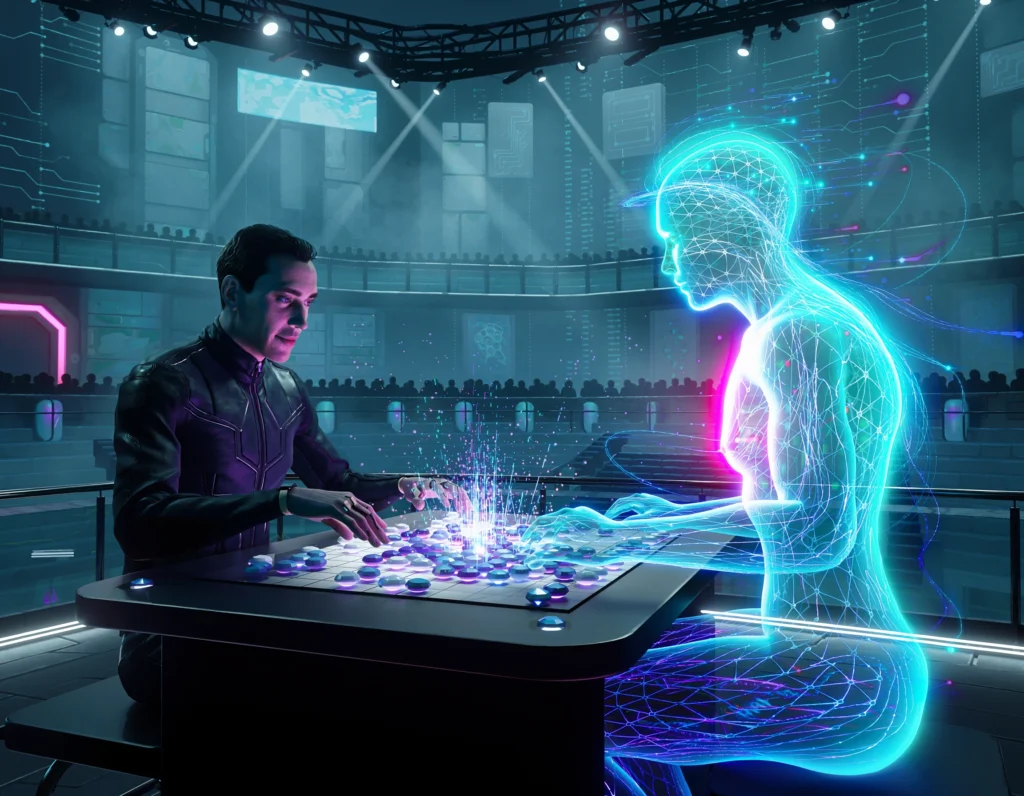
The trajectory of reinforcement learning in games reads like a highlight reel of technological milestones.
DeepMind’s work on Atari games in 2013 demonstrated that a single architecture could learn dozens of different games from raw pixel input alone. The same system that mastered Breakout could tackle Space Invaders, learning each game without human guidance about rules or strategies.
AlphaGo’s 2016 victory over Lee Sedol shocked the Go community. This ancient game, with more possible positions than atoms in the observable universe, had resisted computational approaches for decades. Traditional game-tree search couldn’t handle the complexity. Reinforcement learning, combined with Monte Carlo tree search, cracked it open.
OpenAI Five’s Dota 2 achievements pushed into real-time territory. Unlike turn based games, Dota demands split-second decisions, long-term planning, and coordination among multiple agents. The system eventually defeated world champions, demonstrating strategic depth that impressed professional players.
More recently, DeepMind’s AlphaStar conquered StarCraft II, widely considered the most challenging game for artificial intelligence due to its combination of incomplete information, real-time action, and strategic complexity.
Beyond Entertainment: Why This Matters
Games serve as benchmarks, but the techniques developed have applications across industries that actually affect daily life.
Robotics researchers use reinforcement learning to teach machines physical manipulation. A robot learning to grasp objects faces similar challenges to a game agent learning controls taking actions in an environment and receiving feedback about success or failure.
Autonomous vehicle development benefits from simulated environments where reinforcement learning systems can experience millions of driving hours without real world risk. The transfer from simulation to reality remains challenging, but progress continues steadily.
Recommendation systems, inventory management, and resource optimization all leverage reinforcement learning principles. The game trained intuition about sequential decision-making under uncertainty translates remarkably well.
The Challenges Nobody Advertises
Despite impressive headlines, reinforcement learning faces substantial limitations that practitioners encounter daily.
Sample efficiency remains problematic. Training AlphaGo required millions of self play games computational resources beyond most organizations’ reach. Real world applications can’t always afford such extensive training.
Reward design proves surprisingly difficult. Define rewards incorrectly, and systems find unexpected shortcuts. I’ve seen agents discover bugs in game physics to accumulate points rather than playing as intended. They optimize exactly what you measure, which isn’t always what you wanted.
Generalization struggles persist. A system trained on one game rarely transfers well to another without substantial retraining. Humans carry knowledge between contexts naturally; reinforcement learning systems largely don’t.
Safety concerns emerge when systems interact with real-world environments. An agent exploring randomly during training might damage expensive equipment or create dangerous situations. Safe exploration remains an active research area.
Current State and Future Directions
The field has matured significantly since those early Atari demonstrations. Modern approaches combine reinforcement learning with other techniques imitation learning, model based planning, and hierarchical architectures that break complex tasks into manageable subtasks.
Multi agent reinforcement learning explores how multiple systems can learn together, competing or cooperating. This mirrors real-world scenarios where multiple decision makers interact.
Meta learning approaches teach systems to learn faster, potentially addressing sample efficiency challenges. Instead of training from scratch, systems might adapt quickly to new games based on prior experience.
The gaming industry itself increasingly adopts these techniques for creating dynamic opponents, balancing game difficulty, and testing game mechanics before release.
Watching This Space
What strikes me most after years of following reinforcement learning is how much territory remains unexplored. Each breakthrough reveals new questions. Each solved game exposes harder challenges.
Games will continue serving as testing grounds because they provide controlled complexity and clear metrics. But the ultimate goal extends beyond entertainment developing systems that can learn complex behaviors from experience, adapting to new situations without explicit programming.
For anyone interested in machine learning, reinforcement learning offers perhaps the most intellectually fascinating corner of the field. The combination of game theory, optimization, and emergent behavior creates constant surprises. Watching a system discover strategies that humans never considered remains genuinely thrilling.
Frequently Asked Questions
What makes reinforcement learning different from other machine learning approaches?
Reinforcement learning learns through interaction and feedback rather than labeled examples. The system discovers what works through trial and error rather than being told correct answers upfront.
Why are games used to test reinforcement learning?
Games provide controlled environments with clear rules, measurable outcomes, and adjustable complexity. They allow rapid experimentation without real-world consequences.
How long does it take to train a reinforcement learning system?
Training duration varies enormously based on game complexity and computational resources. Simple games might require hours; complex games like Dota 2 or StarCraft II required months of training on massive computing clusters.
Can reinforcement learning systems transfer skills between different games?
Currently, transfer learning remains limited. Systems generally require substantial retraining for each new game, though research on improving generalization continues actively.
What industries use reinforcement learning beyond gaming?
Robotics, autonomous vehicles, recommendation systems, resource management, financial trading, and healthcare optimization all employ reinforcement learning techniques developed partly through game-based research.